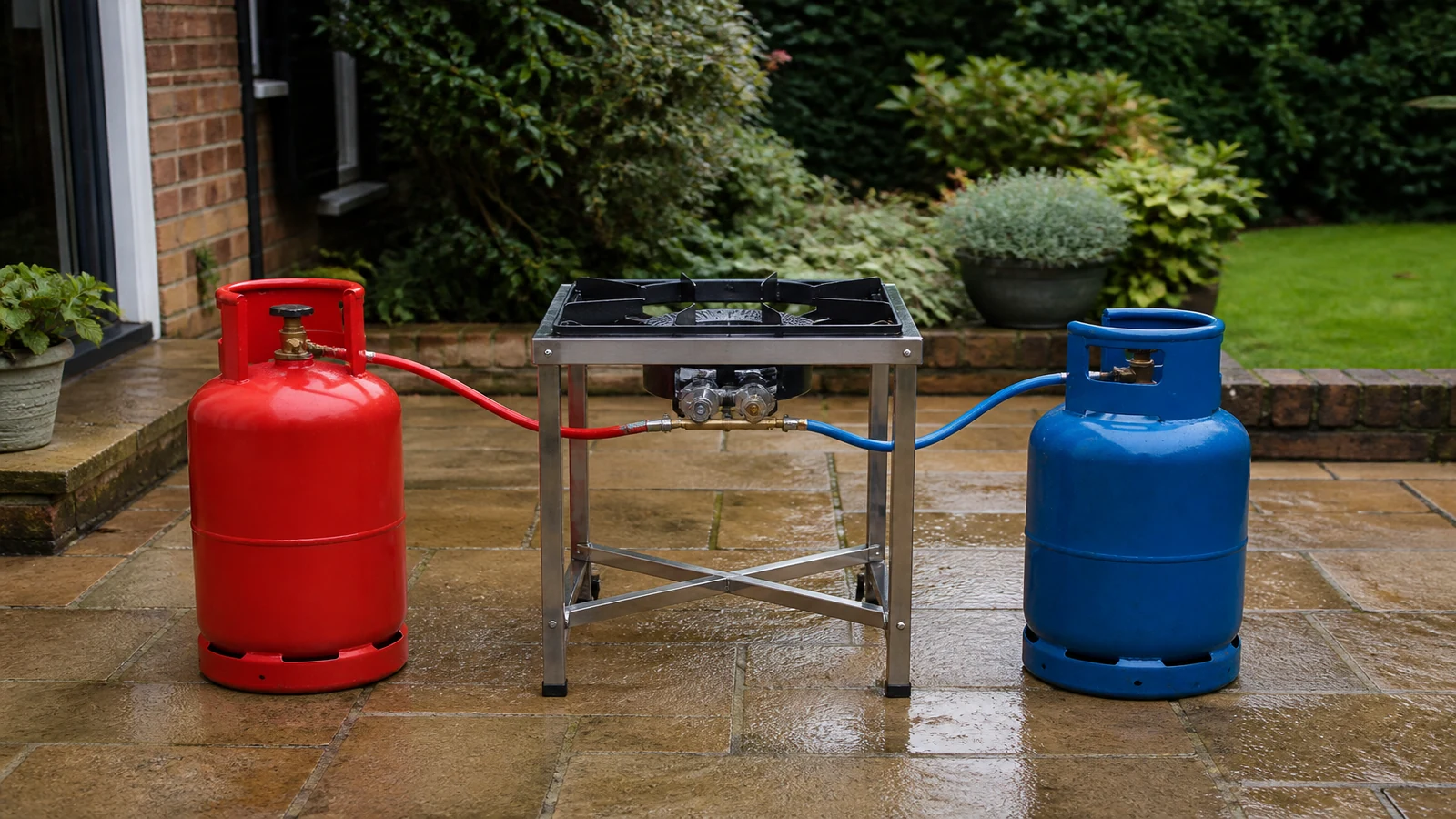
Propane vs Butane for an Outdoor Boiling Ring in the UK
Short answer: propane is usually the steadier choice for outdoor boiling rings in colder UK weather, while butane can suit milder, sheltered use. Always match the gas, hose and regulator to the appliance instructions, use the ring outdoors with good ventilation, and ask a qualified LPG person if anything is unclear.
Outdoor boiling rings are useful for big pans, but LPG setup needs the right gas, regulator, hose and ventilation before heat output matters.
The practical difference between propane and butane
Propane usually performs better in colder UK weather because it vaporises more reliably at lower temperatures. Butane can suit milder, sheltered cooking where the appliance and regulator are matched.
Cold weather, pressure and outdoor cooking
Cylinder connections differ, so patio-gas clip-on and propane screw-on setups should not be forced together. Use the regulator type and pressure specified for the burner.
Matching the cylinder, regulator and hose
Inspect hoses for cracking, age, loose clips or abrasion before lighting. A leak check should be done with leak-detection fluid or soapy water, never with a flame.
Safe setup before lighting an LPG boiling ring
Use boiling rings outdoors on a stable, level, non-combustible surface with space around the flame. Wind shelter should not block ventilation or trap gas.
When to stop and get qualified help
Large marmalade, stock or paella pans need even support. If the pan overhangs badly, wobbles or makes the flame lick around the sides, use a smaller pan or burner.
Quick buying checklist
- Match gas type, regulator and hose to the burner instructions.
- Use the burner outdoors with clear ventilation.
- Leak-check without flames.
- Keep the pan stable and correctly supported.
- Stop if you smell gas or cannot identify a fitting.
FAQ
Is this a job for a beginner?
Some visual checks are beginner-friendly, but electrical, LPG, buried-service and car diagnostic work can become unsafe quickly. Stay with inspection-level checks unless you are competent and have the right equipment.
What should I check before buying a tool or accessory?
Check the product instructions, the job you actually need to do, and whether the item matches your vehicle, appliance, clothing use, garden system, brew-day setup or burner arrangement. If the fit or rating is unclear, pause rather than guessing.
Final buying advice
Choose the burner and gas setup that gives controlled heat with stable support. Do not improvise LPG fittings to make a pan or cylinder work.